 Nyamly
Coming soon to iPhone — Nyamly is not yet on the App Store.
Know what you eat. Including what nobody wrote down.
Nyamly scans a barcode and reads back the published nutrition data. Where a figure was never published, it says so, instead of writing a zero.

Scan a barcode. Read the report.
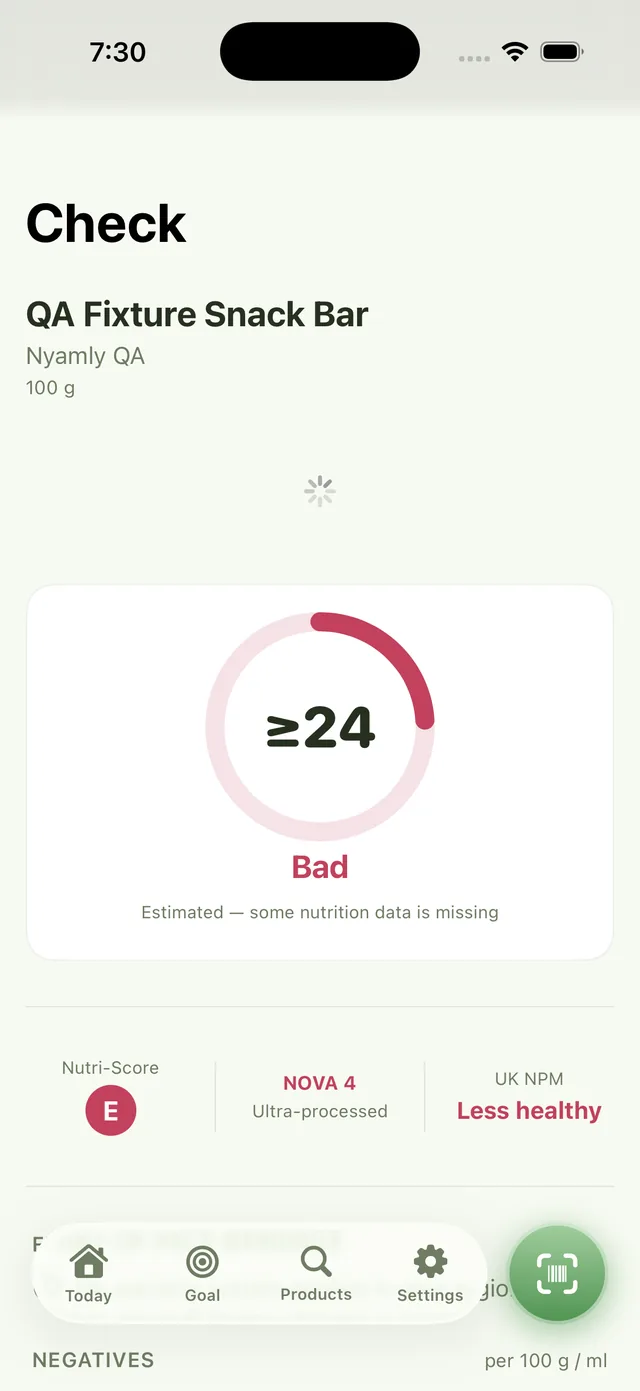
Point the camera at the barcode. Nyamly reads back the label and lays out three things: the Nutri-Score, the NOVA processing group, and the UK nutrient-profile score.
This snack bar has no published fibre value. So the UK score reads ≥24, not 24: the lowest it could be, with a note that the figure is estimated because some data is missing.

Nutri-Score E. Ultra-processed. Missing fibre, so the UK score is a floor, not a fact.
“No score” is an answer.
This spread has a Nutri-Score of E and sits in NOVA 4. But the UK model needs fibre and fruit content that the maker never published. Nyamly cannot score it, so it says No score and Not enough data.
A blank is not a fifty. It is a blank, and the report keeps it that way.

Two of three scores are in. The third is missing on the label, so it stays missing here too.

No barcode? Take a photo.
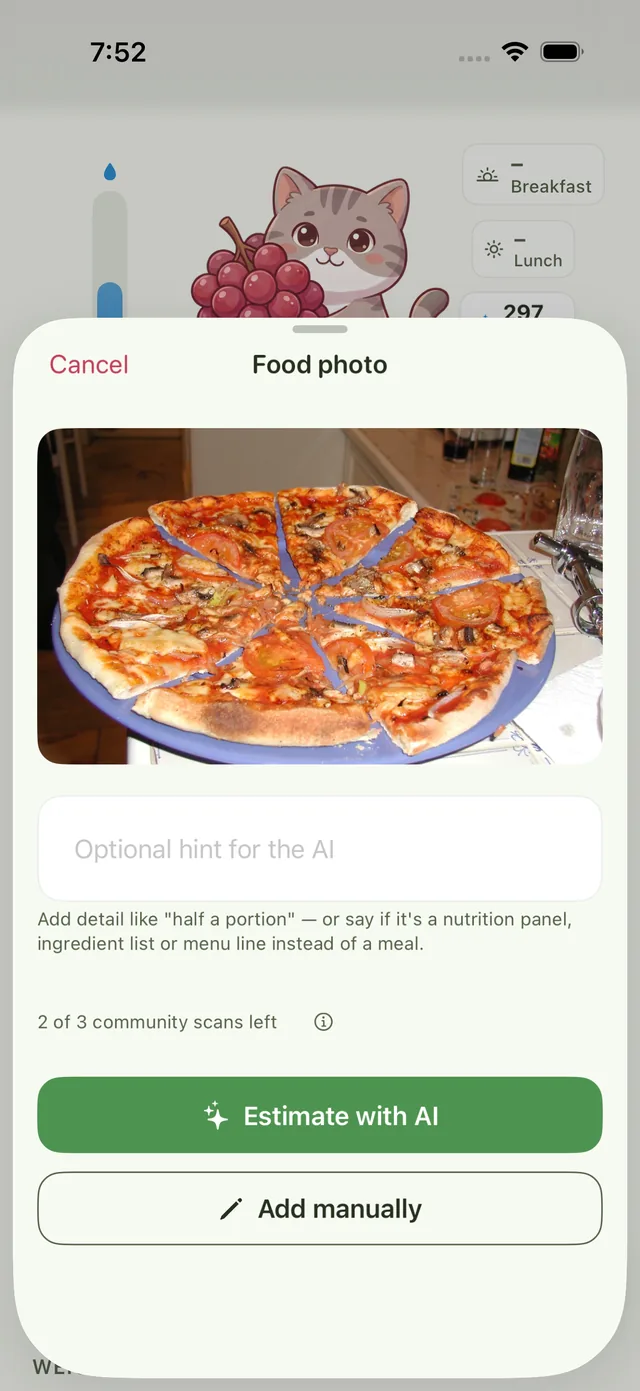
For a plate of food, snap a picture. Nyamly reads back the dishes it sees and a portion guess for each. You confirm the weights before anything is saved.
You get 3 estimates a day, drawn from a weekly pool shared by everyone using Nyamly. The sheet shows your count before you press the button. Every result is marked approximate, because a camera cannot weigh a plate.
Or just describe it.
Type “grilled chicken plate with rice, and a side salad” and you land on the same review screen: each ingredient, its portion, and how sure the model is. Ingredients matched to a database entry say Matched; the rest say Model estimate only.
A typed estimate always carries a ~ in front of its total. It counts against the same 3 a day.

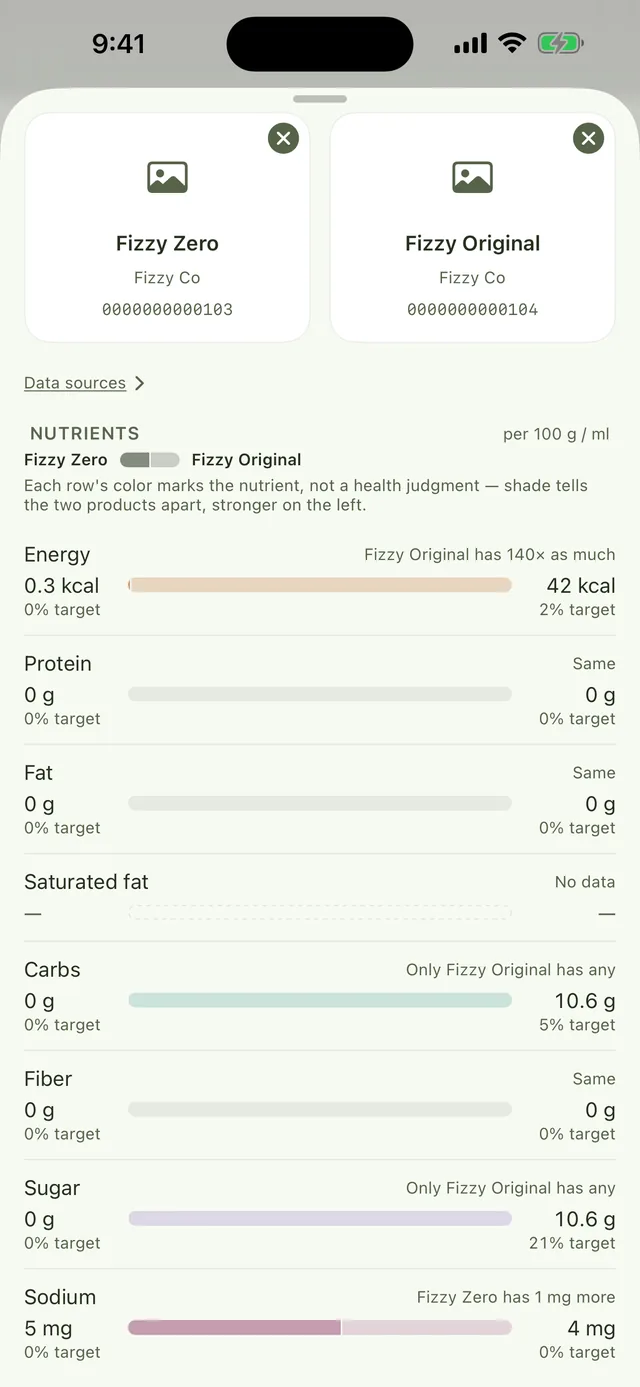
Two products, side by side.
Scan two. Each row shows both figures per 100 g and a bar for how far apart they are. The colour marks the nutrient, not a verdict. Nyamly leaves the judgment to you.
A row where one product has no published figure says No data and stays blank. It never borrows the other product’s number to fill the gap.
A diary with a limit.
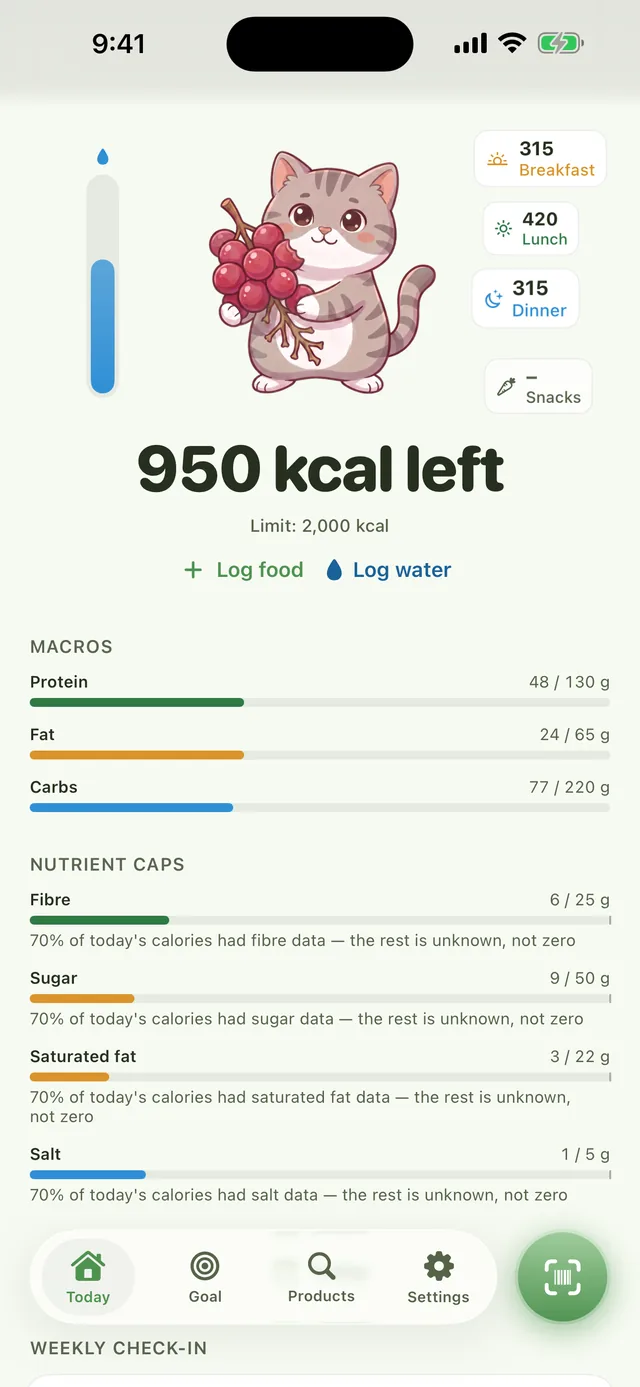
Log meals against a daily limit you choose. Protein, fat and carbs fill in as you go, and nutrient caps for fibre, sugar, saturated fat and salt sit beneath.
When one meal has no calorie data, the day’s total becomes ~1,200 kcal left with a line saying why. The caps say how much of today’s food actually had fibre data, and that the rest is unknown, not zero.

Everything you scanned, kept.
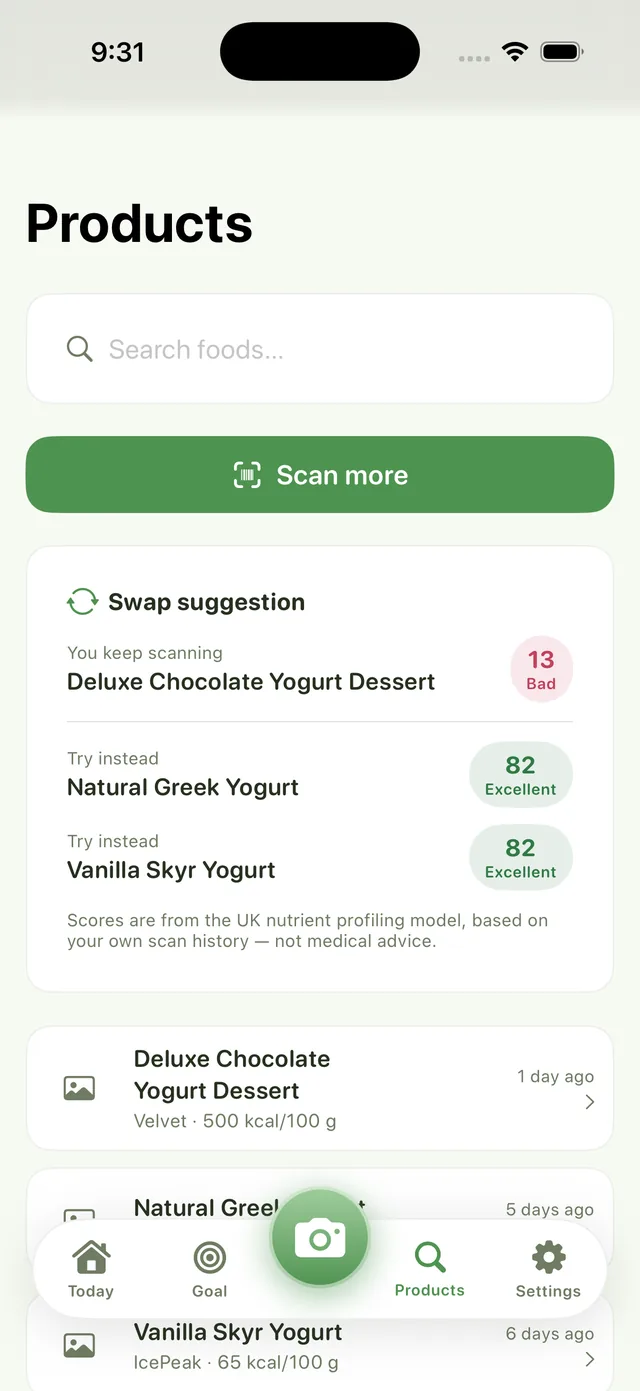
The Products tab holds every scan and search, newest first, so you can open a report again without finding the packet.
Scan the same product a few times over a few days and Nyamly suggests a better-scoring swap from things you have already scanned. Scores come from the UK nutrient-profile model, based on your own scan history. Not medical advice.